
If you develop a fever of 38 °C or higher while receiving chemotherapy, call your oncology team or seek emergency care immediately. Severe breathing difficulty, uncontrolled bleeding or confusion also needs urgent attention.
What Is Chemotherapy and How Does It Work?
Chemotherapy uses medicines to kill cancer cells or slow their proliferation. Many cytotoxic agents also affect normal fast-dividing cells such as bone marrow, hair follicles and gastrointestinal tissues. Medical oncologists tailor treatment to diagnosis, stage, biomarkers, patient health and prior therapies.
Not all patients need chemotherapy. Surgery, radiotherapy, hormonal therapy, immunotherapy or targeted therapy may be more appropriate. Drugs are given intravenously, orally or regionally in selected settings; chemotherapy is different from radiation therapy and radionuclide therapy.
What Is Cancer and Which Cancers May Need Chemotherapy?
Cancer includes diseases characterized by uncontrolled cell growth and possible local invasion or spread. Chemotherapy may play a role in breast, lung, colorectal, gastric, pancreatic, ovarian and certain testicular cancers, as well as leukemias and lymphomas. Treatment depends on tumor biology, not simply the organ involved.
Biopsy, pathology, molecular profiling and staging inform treatment selection. In advanced disease, goals may focus on disease control, symptoms and quality of life rather than cure.
Why Is Chemotherapy Given? Neoadjuvant, Adjuvant and Palliative Treatment
| Approach | Purpose | When? |
|---|---|---|
| Neoadjuvant | Shrink disease or support surgery | Before surgery |
| Adjuvant | Reduce the risk of recurrence from microscopic disease | After surgery |
| Curative | Aim for cure in selected cancers | Alone or in combination |
| Palliative / disease control | Manage symptoms and disease | Selected advanced disease |
Types of Chemotherapy and Routes of Administration
Classes include alkylating agents, platinum compounds, antimetabolites, microtubule inhibitors, topoisomerase inhibitors and anthracyclines. Combination regimens and single-agent regimens serve different needs. Targeted therapy and immunotherapy are distinct from conventional cytotoxic chemotherapy.
- IV infusion: Given in an appropriate hospital or day-infusion facility.
- Oral chemotherapy: Home administration still requires careful dosing and handling.
- Ports and central lines: May improve access for repeated infusions.
- HIPEC / PIPAC: Selected regional approaches in particular abdominal tumors.
How Is Chemotherapy Given? Step by Step
- Oncology review: Diagnosis, stage, goals and regimen are confirmed.
- Blood tests: Counts, kidney and liver function and drug-specific tests are checked.
- Premedication: Antiemetics or other medicines may be given as indicated.
- Infusion: Medicines are delivered via the prescribed route under trained supervision.
- Observation and discharge: Reactions, home medicines, warning signs and next cycle are reviewed.
How Long Does Chemotherapy Take and How Many Cycles?
An infusion may take minutes or several hours, and some medicines are delivered over longer periods with pumps. A cycle includes dosing and recovery time. Frequency and total cycles depend on treatment goals, response and toxicity; there is no universal cycle schedule.
Preparing for Chemotherapy: Blood Tests, Medicines and Nutrition
Bring a list of medicines, supplements, allergies and medical conditions. Discuss pregnancy possibility and fertility goals before starting. Never stop prescribed medicines without guidance. Fasting is not universally required; follow your center’s instructions.
What is the drug and goal? How many cycles? Which common and serious side effects should I expect? Who do I call for fever? How and when will response be assessed?
Side Effects and Risks of Chemotherapy
Side effects depend on the drug and patient. Nausea, fatigue, temporary hair loss, mucositis, low blood counts, diarrhea or constipation can occur. Selected drugs may affect nerves, heart, kidneys, hearing or fertility. Not everyone experiences every effect; care teams monitor and manage risks.
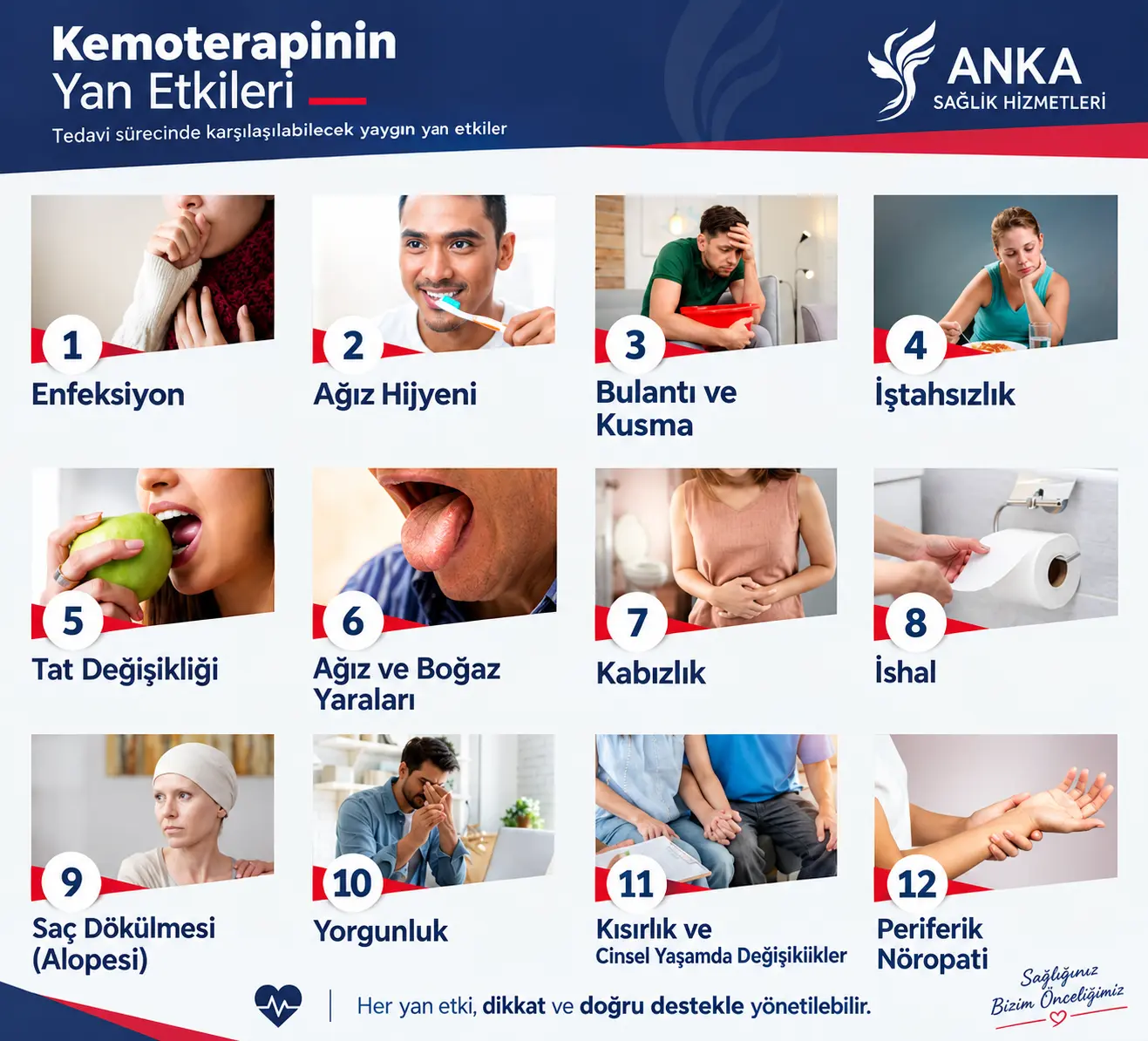
| Symptom / issue | Why it matters | Suggested action |
|---|---|---|
| Fever ≥38 °C | May indicate serious infection | Call oncology team or seek emergency care immediately |
| Mouth sores and difficulty eating | Dehydration and infection risk | Contact care team promptly |
| Hand/foot numbness | Possible drug-related neuropathy | Report early; regimen may need review |
| IV burning or pain | Possible extravasation | Tell infusion staff immediately |
When Should You Seek Emergency Help During Chemotherapy?
Fever of 38 °C or more while receiving chemotherapy requires urgent assessment. Do not simply mask the fever with medication and wait. Severe dyspnea, chest pain, confusion, uncontrolled bleeding or dehydration also require emergency care. Carry your treatment details and oncology contact number.
Nutrition, Food Safety and Daily Life During Chemotherapy
Adequate calories, protein and hydration are important. Small frequent meals may help nausea or taste changes. Practice food safety, particularly during neutropenia. Ask the team for individualized advice rather than adopting unsupported universal dietary restrictions.
Work, activity and sexual health recommendations depend on fatigue, blood counts and the regimen. Discuss contraception, pregnancy and fertility preservation before treatment.
After Chemotherapy: Home Care and Medicine Safety
Take supportive medicines as prescribed. Certain cytotoxic medicines or metabolites may remain in urine, stool or vomit temporarily; follow regimen-specific instructions for bathroom hygiene, laundry and protection of others. Standard chemotherapy does not make the patient radioactive.
Does Chemotherapy Cause Hair Loss?
Hair loss varies widely by regimen. Hair commonly grows back after treatment, although timing differs. Scalp cooling may be considered with selected drugs but is not suitable for everyone.
How Do Doctors Measure Chemotherapy Response?
Side-effect severity does not measure effectiveness. Clinicians evaluate symptoms, physical findings, lab markers and imaging such as CT, MRI or PET/CT at appropriate intervals. Response checks are scheduled by regimen and disease.
Chemotherapy vs Radiotherapy, Immunotherapy and Targeted Therapy
| Treatment | Principle | Key point |
|---|---|---|
| Chemotherapy | Systemic or regional cytotoxic drugs | Alone or in combination |
| Radiotherapy | Ionizing radiation to a planned region | Usually local effect |
| Immunotherapy | Modulates immune responses | Specific clinical context required |
| Targeted therapy | Specific molecular target | May require biomarker tests |
| Surgery | Physical removal of tumor | Depends on stage and operability |
Are There Alternatives to Chemotherapy?
Depending on cancer type, biomarkers and stage, surgery, radiation, immunotherapy, hormonal or targeted therapy may be options. They are not universally interchangeable with chemotherapy. Unproven remedies should not substitute for evidence-based cancer care.
Where Is Chemotherapy Given in Ankara? Travelling From Nearby Provinces
Chemotherapy is given at authorized oncology hospitals or infusion units with appropriate handling and emergency support. Patients traveling from Eskişehir, Kırıkkale, Çankırı, Kırşehir, Bolu or elsewhere should clarify what records, appointments and treatment schedules are needed before travel.
You may enquire with ANKA Sağlık Hizmetleri, but verify the actual licensed facility, specialist, medicine availability, dates and address before booking. This page does not guarantee any particular treatment or facility.
Chemotherapy Prices, Public Reimbursement and Insurance in Ankara
Chemotherapy costs depend on medicines, doses, cycles, facility fees, tests and supportive care. Coverage depends on indications, current rules and insurance terms. Ask for an itemized quote based on your actual treatment plan.
IARC: Searchable Carcinogenic Agents by Cancer Site
Your original reference table is preserved without altering rows or footnotes. It concerns IARC evaluations of evidence linking exposures and cancer sites—not therapy recommendations or determination of an individual cause. Classification updates may occur; verify the corresponding IARC monograph and version.
Classification of Carcinogenic Agents by International Agency for Research According to Cancer Type
List of carcinogenic agents with sufficient and limited evidence in humans.
| Cancer Site | Carcinogenic Agents with Sufficient Evidence in Humans | Agents with Limited Evidence in Humans |
|---|---|---|
| Lip | - Hydrochlorothiazide | Solar radiation |
| Oral Cavity | Acetaldehyde associated with consumption of alcoholic beverages Alcoholic beverages Betel quid with tobacco Betel quid without tobacco Human papillomavirus type 16 (HPV-16) Tobacco (smokeless) Tobacco smoking | Bitumens (occupational exposure to hard bitumens and their emissions during mastic asphalt work), Bitumens (occupational exposure to oxidized bitumens and their emissions during roofing), Human papillomavirus type 18 |
| Salivary Gland | Acetaldehyde associated with consumption of alcoholic beverages X- and Gamma-radiation | Radioiodines (including iodine 131) |
| Pharynx: Oropharynx | - HPV-16 | — |
| Pharynx: Tonsil | - HPV-16 | — |
| Pharynx: Nasopharynx | Epstein–Barr virus Formaldehyde Salted fish (Chinese-style) Wood dust | Pickled vegetables (traditional Asian) |
| Pharynx: All Combined | Acetaldehyde associated with consumption of alcoholic beverages Alcoholic beverages Betel quid with tobacco Tobacco smoking | Asbestos (all forms), Bitumens (occupational exposure to hard bitumens and emissions during mastic asphalt work / roofing), Opium consumption, Tobacco smoke (secondhand) |
| Oesophagus | Acetaldehyde associated with consumption of alcoholic beverages Alcoholic beverages Betel quid with tobacco Betel quid without tobacco HPV-16 Tobacco (smokeless) Tobacco smoking X- and Gamma-radiation | Bitumens (hard/oxidized bitumens and emissions), Dry cleaning, Opium consumption, Pickled vegetables (traditional Asian), Rubber manufacturing industry, Very hot beverages (squamous cell carcinoma) |
| Stomach | Helicobacter pylori (infection with) Rubber manufacturing industry Tobacco smoking X- and Gamma-radiation | Art glass, glass containers and pressed ware (manufacture of), Asbestos (all forms), Automotive gasoline, Epstein–Barr virus, Lead compounds (inorganic), Nitrate or nitrite (ingested under conditions resulting in endogenous nitrosation), Opium consumption, Pickled vegetables (traditional Asian), Processed meat (consumption of), Salted fish (Chinese-style) |
| Colon | Alcoholic beverages Processed meat (consumption of) Tobacco smoking X- and Gamma-radiation | Asbestos (all forms), Firefighter (occupational exposure as a), Night shift work, Red meat (consumption of), Schistosoma japonicum (infection with) |
| Rectum | Alcoholic beverages Processed meat (consumption of) Tobacco smoking | Asbestos (all forms), Night shift work, Red meat (consumption of), Schistosoma japonicum (infection with), X- and Gamma-radiation |
| Anus | Human immunodeficiency virus type 1 (HIV-1) HPV-16 | HPV-18/33 |
| Liver | Aflatoxins Alcoholic beverages Estrogen–progestogen oral contraceptives (combined) Hepatitis B virus Hepatitis C virus Hepatitis D virus Plutonium Thorium-232 and its decay products Tobacco smoking Vinyl chloride | Androgenic (anabolic) steroids, Arsenic and inorganic arsenic compounds, Aspartame (hepatocellular carcinoma), Betel quid without tobacco, DDT (4,4'-dichlorodiphenyl-trichloroethane), Human immunodeficiency virus type 1 (infection with), Schistosoma japonicum (infection with), Trichloroethylene, X- and Gamma-radiation |
| Childhood Liver Cancer (Hepatoblastoma) | Parental tobacco smoking | — |
| Bile Duct | Clonorchis sinensis 1,2-Dichloropropane Opisthorchis viverrini Plutonium Thorium-232 and its decay products Tobacco smoking | Androgenic (anabolic) steroids, Arsenic and inorganic arsenic compounds, Betel quid without tobacco, DDT (4,4'-dichlorodiphenyl-trichloroethane), Dichloromethane (methylene chloride), Hepatitis B virus (chronic infection with), Hepatitis C virus (chronic infection with), Schistosoma japonicum (infection with), Trichloroethylene, X- and Gamma-radiation |
| Gall Bladder | Thorium-232 and its decay products | — |
| Pancreas | Tobacco (smokeless) Tobacco smoking | Alcoholic beverages, Opium consumption, Red meat (consumption of), Thorium-232 and its decay products, X- and Gamma-radiation |
| Nasal Cavity and Paranasal Sinus | Isopropyl alcohol manufacture using strong acids Leather dust Nickel compounds Radium-226/228 and their decay products Tobacco smoking Wood dust | Carpentry and joinery, Chromium(VI) compounds, Formaldehyde, Textile manufacturing industry (work in) |
| Larynx | Acetaldehyde associated with consumption of alcoholic beverages, Acid mists (strong inorganic), Alcoholic beverages, Asbestos (all forms), Opium consumption, Tobacco smoking | Alachlor, Bitumens (hard/oxidized bitumens and emissions), HPV-16/18, Rubber manufacturing industry, Sulfur mustard, Tobacco smoke (secondhand) |
| Lung | Acheson process (occupational exposure), Acrylonitrile, Aluminium production, Arsenic and inorganic arsenic compounds, Asbestos (all forms), Beryllium and beryllium compounds, Bis(chloromethyl)ether; chloromethyl methyl ether, Cadmium and cadmium compounds, Chromium(VI) compounds, Coal (indoor emissions from household combustion), Coal gasification, Coal-tar pitch, Coke production, Engine exhaust (diesel), Haematite mining (underground), Iron and steel founding, MOPP and other combined chemotherapy, Nickel compounds, Opium consumption, Outdoor air pollution (and particulate matter in outdoor air pollution), Painter (occupational exposure), Plutonium, Radon-222 and its decay products, Rubber manufacturing industry, Silica dust (crystalline), Soot, Sulfur mustard, Tobacco smoke (secondhand), Tobacco smoking, Welding fumes, X- and Gamma-radiation | Acid mists (strong inorganic), Art glass / glass containers / pressed ware, Benzene, Biomass fuel (primarily wood - indoor emissions), Bitumens (hard/oxidized bitumens and emissions), Carbon electrode manufacture, alpha-Chlorinated toluenes and benzoyl chloride, Cobalt metal with tungsten carbide, Creosotes, Diazinon, Frying emissions (high-temperature), Hydrazine, Non-arsenical insecticides (spraying and application), Printing processes, Silicon carbide (fibrous), 2,3,7,8-Tetrachlorodibenzo-para-dioxin, Trivalent antimony, Uranium (mixture of isotopes) |
| Upper Aerodigestive Tract | Acetaldehyde associated with consumption of alcoholic beverages, Alcoholic beverages, Tobacco smoking | Bitumens (occupational exposure to hard/oxidized bitumens and their emissions during mastic asphalt work / roofing) |
| Bone | Plutonium, Radium-224, Radium-226, Radium-228 and their decay products, X- and Gamma-radiation | Radioiodines (including iodine-131) |
| Skin - Melanoma | Polychlorinated biphenyls, Solar radiation, Ultraviolet-emitting tanning devices | Firefighter (occupational exposure as a), Hydrochlorothiazide, Petroleum refining (occupational exposures in) |
| Skin - Malignant Non-Melanoma | Arsenic and inorganic arsenic compounds, Azathioprine (SCC), Coal-tar distillation, Ciclosporin (SCC), Hydrochlorothiazide (SCC), Merkel cell polyomavirus, Methoxsalen plus ultraviolet A radiation (SCC), Mineral oils (untreated or mildly treated), Shale oils, Solar radiation (SCC and BCC), Soot, Voriconazole (SCC), X- and Gamma-radiation (BCC) | Creosotes, Human immunodeficiency virus type 1 (infection with), Human papillomavirus types 5 and 8 (in patients with EV) (SCC), Hydrochlorothiazide (BCC, Merkel cell carcinoma, malignant adnexal skin tumours), Nitrogen mustard (SCC), Petroleum refining (occupational exposures in), Tacrolimus (SCC), Ultraviolet-emitting tanning devices (SCC) |
| Mesothelium (Pleura, Peritoneum, and Other) | Asbestos (all forms), Erionite, Firefighter (occupational exposure as a), Fluoro-edenite fibrous amphibole, Painter (occupational exposure as a) | — |
| Endothelium (Kaposi Sarcoma) | Human immunodeficiency virus type 1 (infection with), Kaposi sarcoma herpesvirus | — |
| Soft Tissue | — | Polychlorophenols and their sodium salts (combined exposures), Radioiodines (including iodine-131), 2,3,7,8-Tetrachlorodibenzo-para-dioxin |
| Breast | Alcoholic beverages, Diethylstilbestrol, Estrogen–progestogen oral contraceptives (combined), Estrogen–progestogen menopausal therapy (combined), X- and Gamma-radiation | Dieldrin (and aldrin metabolized to dieldrin), Digoxin, Estrogen therapy (postmenopausal), Ethylene oxide, Night shift work, Polychlorinated biphenyls, Tobacco smoking |
| Vulva | HPV-16 | Human immunodeficiency virus type 1 (infection with), Human papillomavirus types 18 and 33 |
| Vagina | Diethylstilbestrol (exposure in utero), HPV-16 | Human immunodeficiency virus type 1 (infection with) |
| Uterine Cervix | Diethylstilbestrol (exposure in utero), Estrogen–progestogen oral contraceptives (combined), Human immunodeficiency virus type 1 (infection with), HPV-16/18/31/33/35/39/45/51/52/56/58/59, Tobacco smoking | Human papillomavirus types 26, 53, 66, 67, 68, 70, 73, and 82 |
| Endometrium | Estrogen therapy (postmenopausal), Estrogen–progestogen menopausal therapy (combined), Tamoxifen | Diethylstilbestrol |
| Ovary | Asbestos (all forms), Estrogen therapy (postmenopausal), Tobacco smoking | Talc, X- and Gamma-radiation |
| Penis | HPV-16 | Human immunodeficiency virus type 1 (infection with), HPV-18 |
| Prostate | — | Androgenic (anabolic) steroids, Arsenic and inorganic arsenic compounds, Cadmium and cadmium compounds, Firefighter (occupational exposure as a), Malathion, Night shift work, Red meat (consumption of), Rubber manufacturing industry, Thorium-232 and its decay products, X- and Gamma-radiation |
| Testis | — | DDT (4,4'-dichlorodiphenyl-trichloroethane), Diethylstilbestrol (exposure in utero), N,N-Dimethylformamide, Firefighter (occupational exposure as a), Perfluorooctanoic acid (PFOA) |
| Kidney | Tobacco smoking, Trichloroethylene, X- and Gamma-radiation | Arsenic and inorganic arsenic compounds, Automotive gasoline, Cadmium and cadmium compounds, Perfluorooctanoic acid (PFOA - renal cell carcinoma), Welding fumes |
| Renal Pelvis and Ureter | Aristolochic acid (plants containing), Phenacetin, Phenacetin (analgesic mixtures containing), Tobacco smoking | Aristolochic acid |
| Urinary Bladder | Aluminium production, 4-Aminobiphenyl, Arsenic and inorganic arsenic compounds, Auramine production, Automotive gasoline, Benzidine, Chlornaphazine, Cyclophosphamide, Firefighter (occupational exposure as a), Magenta production, 2-Naphthylamine, Opium consumption, Painter (occupational exposure as a), Rubber manufacturing industry, Schistosoma haematobium (infection with), Tobacco smoking, ortho-Toluidine, X- and Gamma-radiation | Acrylonitrile, 4-Chloro-ortho-toluidine, Coal-tar pitch, Dry cleaning (occupational exposures in), Engine exhaust (diesel), Hairdresser or barber (occupational exposure as a), 2-Mercaptobenzothiazole, Outdoor air pollution, Pioglitazone, Printing processes (occupational exposures in), Soot, Tetrachloroethylene (Perchloroethylene), Textile manufacturing industry (work in) |
| Eye | Human immunodeficiency virus type 1 (infection with), Ultraviolet emissions from welding, Ultraviolet-emitting tanning devices | Solar radiation |
| Brain and central nervous system | X- and Gamma-radiation | Radiofrequency electromagnetic fields (glioma and acoustic neuroma) |
| Childhood acute lymphoblastic leukaemia | - | Automotive gasoline, Human cytomegalovirus, Tobacco smoking (parental) |
| Childhood acute myeloid leukaemia | - | Benzene, Teniposide, Tobacco smoking (parental) |
| Childhood leukaemia: all combined | Fission products, including strontium-90, Thorium-232 and its decay products, X- and Gamma-radiation | Chloramphenicol, Magnetic fields, extremely low-frequency, Painter (maternal occupational exposure as a), Radioiodines, including iodine-131, Tobacco smoking (parental exposure) |
| Acute Myeloid Leukaemia | Automotive gasoline, Benzene, Busulfan, Chlorambucil, Cyclophosphamide, Etoposide in combination with cisplatin and bleomycin, Formaldehyde, Melphalan, MOPP and other combined chemotherapy including alkylating agents, Phosphorus-32, as phosphorus, Semustine [1-(2-Chloroethyl)-3-(4-methylcyclohexyl)-1-nitrosourea, Methyl-CCNU], Thorium-232 and its decay products, Tobacco smoking, Treosulfan, X- and Gamma-radiation | Bischloroethyl nitrosourea (BCNU), Etoposide, Mitoxantrone, Teniposide |
| Myelodysplastic Syndrome | — | Automotive gasoline |
| Other Acute Non-Lymphocytic Leukaemia | Benzene, Formaldehyde, Phosphorus-32, as phosphorus, Thorium-232 and its decay products, X- and Gamma-radiation | Bischloroethyl nitrosourea (BCNU) |
| Chronic Myeloid Leukaemia | Formaldehyde, Thorium-232 and its decay products, Tobacco smoking, X- and Gamma-radiation | Benzene |
| Acute Lymphocytic Leukaemia | Phosphorus-32, as phosphorus, Thorium-232 and its decay products, X- and Gamma-radiation | — |
| Chronic Lymphocytic Leukaemia | — | Automotive gasoline, Benzene, Ethylene oxide |
| Adult T-Cell Leukaemia/Lymphoma (ATLL) | Human T-cell lymphotropic virus type 1, Thorium-232 and its decay products, X- and Gamma-radiation | — |
| Leukaemia: All Combined | 1,3-Butadiene, Fission products, including strontium-90, Rubber manufacturing industry, Thiotepa | Chloramphenicol, Diazinon, Nitrogen mustard, Petroleum refining (occupational exposures in), Radioiodines, including iodine-131, Radon-222 and its decay products, Styrene, Tacrolimus |
| Hodgkin Lymphoma | Epstein–Barr virus, Human immunodeficiency virus type 1 (infection with) | — |
| Primary Effusion Lymphoma | Kaposi sarcoma herpesvirus | — |
| Non-Hodgkin Lymphoma: Immunosuppression-Related Lymphoma (Including Post-Transplant Lymphoproliferative Disorder) | Epstein–Barr virus, Tacrolimus | — |
| Non-Hodgkin Lymphoma: Burkitt Lymphoma | Epstein–Barr virus | Malaria (caused by infection with Plasmodium falciparum in holoendemic areas) |
| Non-Hodgkin Lymphoma: Extranodal NK/T-Cell Lymphoma (Nasal Type) | Epstein–Barr virus | — |
| Non-Hodgkin Lymphoma: Low-Grade B-Cell Mucosa Associated Lymphoid Tissue (MALT) Gastric Lymphoma | Helicobacter pylori (infection with) | — |
| Non-Hodgkin Lymphoma: Positive for the Chromosomal Translocation t(14;18) | — | Atrazine |
| Non-Hodgkin Lymphoma: All Combined | Azathioprine, Ciclosporin, Hepatitis C virus (chronic infection with), Human immunodeficiency virus type 1 (infection with), Lindane, Pentachlorophenol, Tacrolimus | Automotive gasoline, Benzene, Chlorophenoxy herbicides, DDT (4,4'-dichlorodiphenyl-trichloroethane), Diazinon, Dichloromethane (methylene chloride), Ethylene oxide, Firefighter (occupational exposure as a), Glyphosate, Hepatitis B virus (chronic infection with), Malathion, Polychlorinated biphenyls, Polychlorophenols and their sodium salts (mixed exposures), 2,3,7,8-Tetrachlorodibenzo-para-dioxin, Trichloroethylene, X- and Gamma-radiation |
| Multicentric Castleman Disease | — | Kaposi sarcoma herpesvirus |
| Lymphoma: All Combined | 1,3-Butadiene, Rubber manufacturing industry | Styrene |
| Multiple Myeloma | 1,3-Butadiene, Pentachlorophenol | Automotive gasoline, Benzene, Ethylene oxide, Styrene, 1,1,1-Trichloroethane, X- and Gamma-radiation |
| Lymphoepithelioma-Like Carcinoma (LELC) | — | Epstein–Barr virus |
| Multiple Sites (Unspecified) | Ciclosporin, Fission products, including strontium-90, X- and Gamma-radiation (exposure in utero) | Chlorophenoxy herbicides |
| All Cancer Sites (Combined) | 2,3,7,8-Tetrachlorodibenzo-para-dioxin | — |
Chemotherapy Information and Appointment Request
Confirm the appropriate treatment center, pricing, and appointment details by providing the requested prior reports and any specific preparation requirements.
Contact / Appointment Form☎ 0538 350 74 45Frequently Asked Questions About Chemotherapy
These answers are general; only your oncology team can provide personal drug, dose or scheduling decisions.
What is chemotherapy?
Chemotherapy is a drug treatment intended to kill or inhibit cancer cells. Suitability depends on cancer type, stage and patient factors.
Where is chemotherapy given in Ankara?
Chemotherapy is administered at licensed hospital or infusion units with medical oncology support. Ask ANKA for guidance and confirm the actual treatment facility.
Which cancers may be treated with chemotherapy?
It may be used for breast, lung, colorectal, ovarian, lymphoma, leukemia and other cancers; it is not required for every patient or stage.
Does chemotherapy cure cancer?
It can be curative in some settings and disease-controlling or symptom-relieving in others; outcomes vary.
Why is chemotherapy prescribed?
It may shrink a tumor before surgery, lower relapse risk afterward, complement other treatment or relieve symptoms.
What is neoadjuvant chemotherapy?
It is systemic chemotherapy before definitive local treatment, potentially reducing tumor size.
What is adjuvant chemotherapy?
It is treatment after surgery to address possible microscopic disease and reduce recurrence risk.
What is palliative chemotherapy?
In selected non-curative settings it aims to control disease and symptoms; benefits and harms must be discussed.
What are types of chemotherapy?
Classes include alkylators, antimetabolites, antitumor antibiotics, taxanes, vinca alkaloids and others.
Is chemotherapy the same as immunotherapy?
No. Cytotoxic chemotherapy acts on cell division; immunotherapy changes immune responses. They may be combined.
Is chemotherapy the same as targeted therapy?
No. Targeted therapies act on selected molecular changes and differ from conventional cytotoxic drugs.
How is chemotherapy administered?
It may be given by IV infusion, injection, pills or selected regional routes under a prescribed protocol.
Does chemotherapy hurt?
Administration is usually not painful except for IV insertion; pain, burning or swelling at the line should be reported immediately.
What is a chemotherapy port?
An implanted access device for repeated venous treatment; not everyone needs one.
What is a chemotherapy cycle?
A cycle combines treatment days and recovery time; the number and spacing are individualized.
How long does an infusion session take?
It may last minutes to several hours or longer depending on medications, premedication and monitoring.
How many chemotherapy cycles are given?
The regimen, cancer, purpose, response and toxicity determine how many cycles are given.
Should I fast before chemotherapy?
There is no universal fasting rule; follow the center’s instructions for nausea management, sedation or other procedures.
What blood tests are done before chemotherapy?
Blood count, kidney and liver tests are commonly checked, with additional tests tailored to regimen and patient.
Does chemotherapy cause hair loss?
Not all drugs cause hair loss; thinning or loss may happen and often reverses afterward.
Does chemotherapy cause nausea?
Some regimens cause nausea or vomiting; preventive medicines can often help.
Does chemotherapy lower immunity?
Some regimens reduce neutrophils and increase infection risk; monitor fever and other infection symptoms.
What temperature is urgent during chemotherapy?
Fever at or above 38 °C during chemotherapy requires immediate contact with the oncology team or emergency care.
Can chemotherapy cause mouth sores?
Some drugs cause mucositis; oral hygiene and treatment are individualized.
Can chemotherapy cause neuropathy?
Some drugs cause tingling, numbness or pain in hands and feet; report symptoms promptly.
Can chemotherapy affect the heart or kidneys?
Selected agents may affect organs; monitoring depends on the drug and patient.
What should I eat during chemotherapy?
Aim for adequate nutrition and food safety; dietitian support is useful for weight loss and swallowing difficulties.
Are any foods forbidden during chemotherapy?
There is no universal forbidden-food list; food safety is important, especially with low blood counts.
Can I take supplements or herbs during chemotherapy?
Some supplements interact with treatment; discuss herbs, vitamins and antioxidants with the oncology team.
Can I work while on chemotherapy?
Some people can keep working with adaptations based on fatigue, infection risk and job demands.
What home precautions are needed after chemotherapy?
Specific medicines may require short-term precautions around body fluids; follow your oncology team’s guidance.
Does a chemotherapy patient emit radiation?
Conventional chemotherapy does not make someone radioactive; radionuclide therapy is different.
How long does chemotherapy remain in the body?
Clearance varies by drug and patient; the care team provides appropriate safety timeframes.
Can chemotherapy be given in pregnancy?
Cancer treatment in pregnancy requires specialist evaluation of gestational timing and regimen.
Can chemotherapy affect fertility?
Some regimens may impair fertility; discuss preservation before treatment starts.
Can I be vaccinated during chemotherapy?
Vaccination timing and type must be discussed with the clinical team, particularly live vaccines.
When can response to chemotherapy be assessed?
Response is assessed with exams, scans and labs at appropriate intervals; not necessarily after one session.
How do I know chemotherapy is working?
Doctors assess clinical, imaging and lab results; the severity of side effects does not prove effectiveness.
When are chemotherapy-related reports available?
There is no single chemotherapy result report; blood tests and response imaging have different turnaround times.
What does chemotherapy cost?
Costs vary by regimen, drug, facility and coverage; request an itemized quote.
Is chemotherapy covered by public insurance?
Reimbursement depends on the drug, indication, facility and current rules; verify before treatment.
Is chemotherapy or radiotherapy more effective?
Neither is universally better. Chemotherapy is often systemic and radiation therapy usually local, with different roles.
Can immunotherapy replace chemotherapy?
Immunotherapy may be suitable in selected settings, sometimes with chemotherapy; it is not a universal replacement.
What are HIPEC and PIPAC?
These are selected regional chemotherapy approaches for certain abdominal cancers, not universally available or appropriate.
What should I bring to an infusion visit?
Bring your medicine list, test results and records; follow the center’s instructions for comfort and support.
Can an infusion cause an allergic reaction?
Some drugs can cause infusion reactions; immediately report breathing difficulty, rash, chest tightness or dizziness.
What symptoms require emergency care after chemotherapy?
Fever of 38 °C or higher, dyspnea, uncontrolled bleeding, confusion or rapid deterioration need urgent assessment.
How can patients travel to Ankara for chemotherapy?
Patients travelling to Ankara should confirm the facility, regimen, appointments and repeated treatment schedule.
Does the IARC table recommend chemotherapy medicines?
No. The IARC table classifies evidence of carcinogenic hazards and does not determine an individual’s cancer cause or treatment.
International Medical Sources
- World Health Organization
- General Directorate of Public Health
- American Cancer Society
- Worlwide Cancer Research
- National Health Service
- AU Icon Cancer Centre
- AU Health Directorate
- NCI — Chemotherapy to Treat Cancer
- CDC — Fever During Chemotherapy
- NCI — Nutrition During Cancer
- American Cancer Society — Chemotherapy Safety
- NCI — Types of Cancer Treatment
- IARC — Monographs on the Identification of Carcinogenic Hazards
This page is informational, not a prescription or individual treatment plan.