

Where Should You Start When Considering Lu-177?
Lutetium-177 is an isotope used in targeted radiopharmaceutical treatment. Lu-177 PSMA for selected prostate cancer and Lu-177 DOTATATE PRRT for certain neuroendocrine tumors differ. This page focuses on the practical assessment and care journey, not detailed molecular mechanisms.
For the molecular mechanism, theranostics, PSMA versus DOTATATE science and clinical imaging details, see our separate nuclear medicine guide.
Read the nuclear medicine Lu-177 background guide →
Six Steps for a Lutetium Therapy Inquiry in Ankara
- 01Initial oncology assessmentReview disease status, previous treatment and clinical indication.
- 02Confirm molecular targetReview PSMA or somatostatin-receptor imaging as relevant.
- 03Prepare medical recordsGather pathology, imaging, medication list, labs and treatment history.
- 04Review by an authorized facilityVerify product, local indication, organ function and facility availability.
- 05Plan administration and travelConfirm cycle date, stay, escort, accommodation and costs.
- 06Arrange follow-up and safetyReceive follow-up checks and individualized radiation instructions.
Who May Be Considered for Lu-177 Therapy?
A cancer diagnosis alone does not determine eligibility. Clinicians assess molecular target expression, disease stage, previous treatments, marrow and kidney function, overall condition and local product approvals.
| Treatment | Typical indication | Key assessment |
|---|---|---|
| Lu-177 PSMA-617 | Selected PSMA-positive metastatic castration-resistant prostate cancer | PSMA PET, treatment history and organ function |
| Lu-177 DOTATATE / PRRT | Selected SSTR-positive gastroenteropancreatic NETs | Receptor PET, blood and kidney function, disease course |
| Other Lu-177 compounds | May be investigational or subject to differing approvals | Verify national approval and protocol |
The 2025 US FDA expansion does not automatically change indications or coverage in Türkiye. Verify locally approved uses and availability.
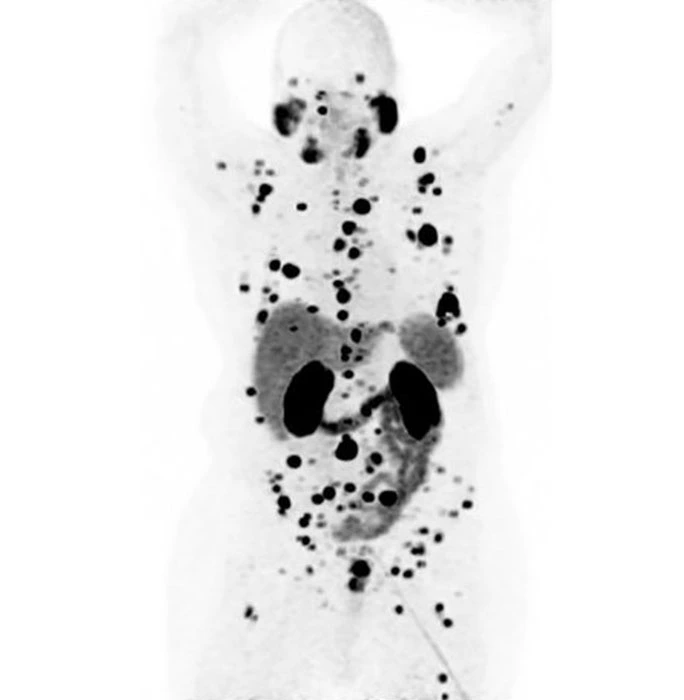
PSMA-PET scan demonstrating widespread metastatic prostate cancer. As a result, the patient received Lu-177 therapy.
Records to Bring to Your First Assessment
- Pathology and relevant molecular reports
- Prior surgery, chemotherapy, hormone therapy and radiotherapy summaries
- Relevant PSMA or DOTATATE PET report and available imaging files
- Recent blood count, kidney function and other ordered laboratory results
- Current medicines and allergy history
- Current symptoms and other medical conditions
This is a practical checklist rather than a fixed requirement. The treating facility may request more records. Share personal health information through appropriate secure channels.
Lu-177 Therapy Versus PET Imaging
The colloquial phrase “lutetium PET scan” may confuse diagnostic imaging with therapy. PSMA PET/CT and DOTATATE PET detect target expression; Lu-177 delivers therapeutic radiation. Post-therapy SPECT imaging is different from PET.
What Happens on Your Treatment Day?
- 01Check-in and safety reviewIdentity, medications, safety considerations and discharge plan are reviewed.
- 02Review laboratory valuesBlood counts and renal results are confirmed.
- 03IV access and supportive careHydration, antiemetics or amino-acid protection for PRRT are arranged as appropriate.
- 04Radiopharmaceutical administrationThe authorized team administers the product according to its protocol.
- 05Observation and possible imagingSymptoms are monitored and post-therapy imaging may be arranged.
- 06Discharge and written precautionsYou receive individualized radiation safety instructions and follow-up dates.
How Are Lu-177 Cycles Scheduled?
Selected approved Lu-177 PSMA-617 regimens may involve up to six cycles about six weeks apart; common Lu-177 DOTATATE schedules involve four cycles roughly eight weeks apart. These are not individual prescriptions, and schedules change with clinical status.
Before Treatment: Food, Medicines and Practical Preparations
- Do not assume a standard fasting duration; the product matters.
- Do not stop medicines, especially anticoagulants or hormone therapy, without medical advice.
- Follow hydration advice and report any kidney or heart-related fluid restrictions.
- Disclose pregnancy, breastfeeding, fertility plans and young children at home.
- Confirm transport, escort and possible overnight stay.
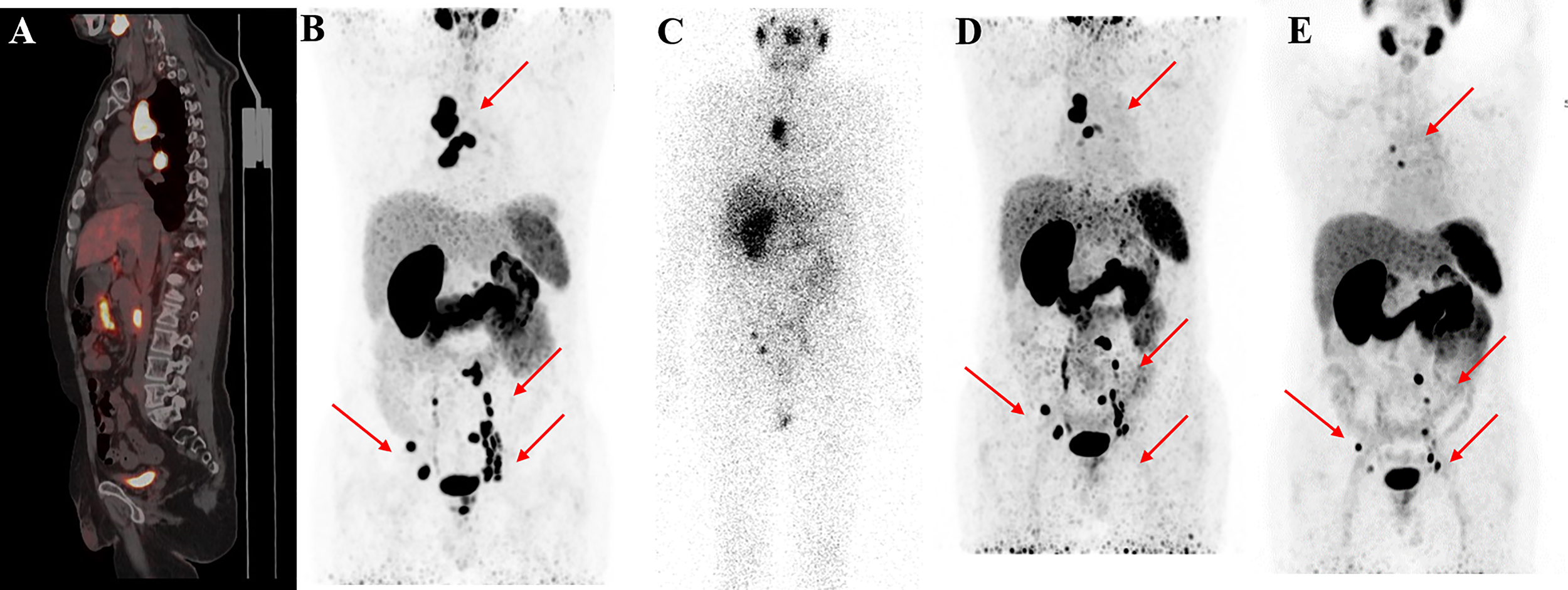
68Ga-PSMA-11 PET/CT in a 55-year-old patient who underwent four cycles of 177Lu-PSMA-I&T therapy. Baseline images (A, B) of multiple lymph node metastases in the right subclavian area, mediastinum, retroperitoneum, and pelvis. Post-therapy image (C) showing higher 177Lu-PSMA-I&T aggregation in primary and metastatic lesions. 68Ga-PSMA PET/CT after the first cycle (D) and after the third cycle (E) showing multiple decreased or disappeared metastases.
Aftercare: Radiation Safety at Home
Special precautions may be required for close contact, shared toilets and bodily fluids after radioactive therapy. The duration is individualized according to product, activity, measurements and local rules; there is no universal number of days.
Get an individualized written sheet covering contact with children or pregnant people, sleeping arrangements, toilets, laundry, work and travel.
Side Effects and Urgent Warning Signs
Fatigue, nausea, dry mouth, appetite changes and reduced blood counts are possible. More severe marrow or kidney toxicity can occur depending on the product and patient.
Fever, shortness of breath, uncontrolled bleeding, fainting, markedly reduced urine output or sudden serious deterioration needs urgent assessment.
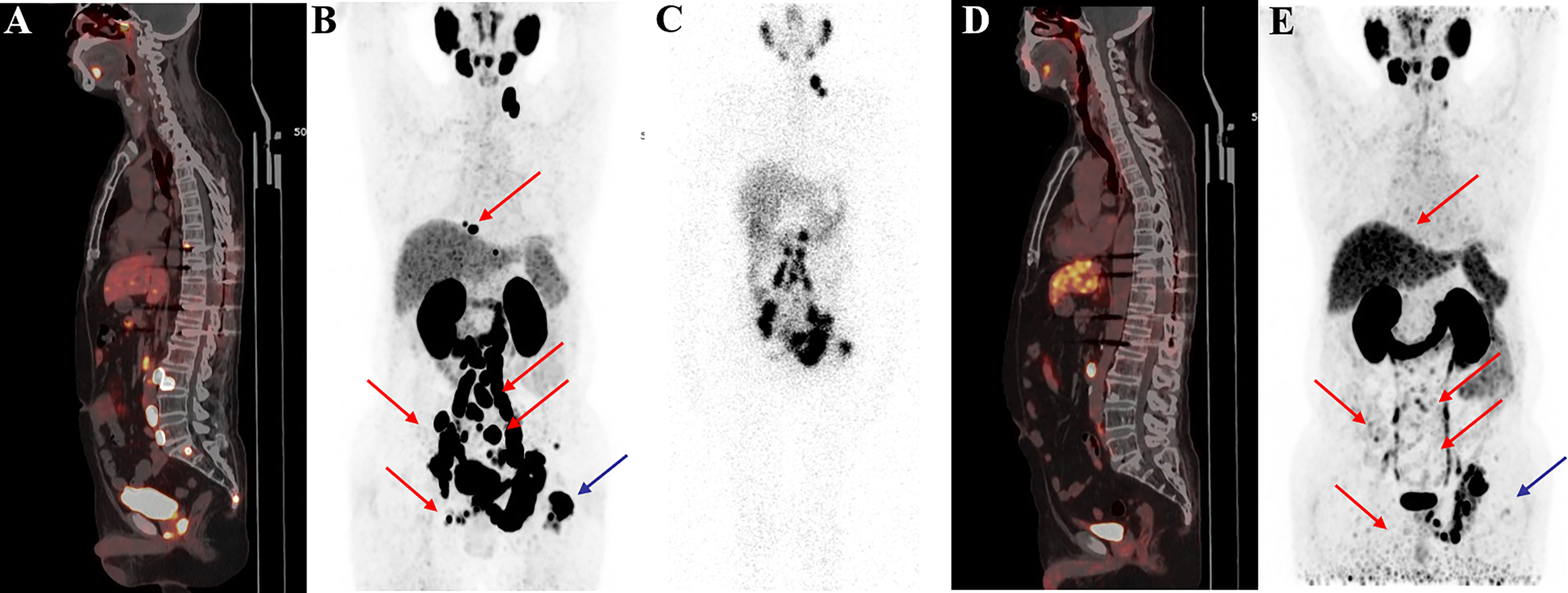
68Ga-PSMA-11 PET/CT in a 62-year-old patient with mCRPC. Baseline images (A, B) of multiple bone and lymph node metastases with increased PSMA expression. Post-therapy image (C) showing high 177Lu-PSMA-I&T aggregation in primary and metastatic lesions. Post-treatment image (D, E) showing multiple osteogenic metastases and reduced PSMA expression compared with before therapy. Metastatic foci in the left clavicle, abdominal aorta, and bilateral iliac paravascular lymph nodes were significantly reduced and PSMA expression was decreased, suggesting that the treatment was effective.
When and How Is the Treatment Response Assessed?
Treatment response does not arrive as a single next-day laboratory report. Symptoms, laboratory markers and scheduled imaging are assessed across cycles. A PSA decrease may be helpful in prostate cancer but should not be interpreted alone.
Where Is Lutetium Therapy Performed in Ankara?
Lu-177 therapy requires an authorized nuclear medicine service with appropriate radiation safety arrangements. This page does not establish that a named facility offers both products. Confirm the exact treating facility, supervising clinician, product and available service before booking.
People coming from nearby provinces should request preliminary record review and coordinate treatment date, accommodation, escorts and travel precautions.
Lu-177 Treatment Cost and Insurance in Ankara
Total costs vary with product, number of cycles, imaging, laboratory work and admission. Avoid relying on unverified fixed prices or insurance claims. Ask for an itemized written quote.
| Question for the clinic | Why it matters |
|---|---|
| Which Lu-177 product will be used? | Indication, safety and cost differ. |
| Is the price per cycle or total? | Clarifies total financial exposure. |
| Are PET, blood tests and admission included? | Avoids unexpected additional costs. |
| Has coverage been authorized? | Coverage varies by case and facility. |
Request a Treatment Assessment
First verify the actual facility, radiopharmaceutical, authorization and available appointments.
Frequently Asked Questions on Lu-177 Treatment
How do I begin a lutetium therapy inquiry in Ankara?
Ask your oncologist or nuclear medicine specialist for an eligibility review, then arrange authorized facility assessment using pathology, imaging, tests, and treatment history.
At which hospital does Anka provide Lu-177?
This page does not establish treatment availability at any specific facility. Confirm the authorized physical location, product access, and treating specialist directly before travel.
Who decides whether I am eligible?
Oncology and nuclear medicine teams assess imaging, prior treatment, blood counts, organ function, and locally approved indications.
Do I need a PET scan report?
Target imaging is commonly necessary; the appropriate PET tracer depends on whether PSMA or somatostatin receptors are being targeted.
Can FDG PET replace PSMA PET?
FDG PET does not routinely substitute for PSMA target-expression imaging; specialists select imaging to match therapy.
Which medical records should I prepare?
Prepare pathology, treatment history, medication list, relevant PET/CT, blood counts, and kidney tests as requested by the treating center.
Are PSMA and PRRT the same therapy?
No. Lu-177 PSMA targets PSMA in selected prostate cancer; Lu-177 DOTATATE PRRT targets somatostatin receptors in specific neuroendocrine tumors.
Should I book a lutetium PET scan?
The term can be misleading: PET imaging and Lu-177 treatment are distinct. Confirm which procedure your clinician prescribed.
Will the drug be administered at my first visit?
Eligibility review, scans, labs, and product scheduling may be required; an assessment visit is not necessarily a treatment day.
Do I need to fast before treatment?
There is no universal fasting rule; follow the product-specific instructions from your treatment center.
Should blood thinners or other drugs be stopped?
Never stop medication without medical advice. Share your complete medication list for individualized instructions.
Which blood tests are needed?
Blood count and kidney function, and sometimes liver tests, are checked. Treatment may be delayed or withheld based on results.
Is an overnight hospital stay necessary?
Admission versus outpatient discharge depends on local rules, activity, the radiopharmaceutical, and radiation measurements.
How long does a treatment visit last?
Infusion duration is only part of the visit; preparation, monitoring, hydration and release measurements affect total time.
How many Lu-177 PSMA cycles are planned?
Some approved Lu-177 PSMA-617 schedules allow up to six administrations at six-week intervals; clinical modifications are individualized.
How many DOTATATE cycles are used?
A common PRRT regimen is four administrations at about eight-week intervals, subject to approved product instructions and clinical circumstances.
How long should I limit close contact with children?
Follow your individualized radiation protection sheet; a universal restriction period is not appropriate.
Are toilet precautions needed afterward?
Follow the facility’s written instructions for toilet hygiene and cleaning during the specified period.
Should I bring someone with me?
Escort needs depend on health, travel and discharge rules; visitor access to the treatment zone may be restricted.
How long should I stay if traveling to Ankara?
Same-day travel home cannot be guaranteed. Confirm assessment, administration and possible isolation before booking accommodations.
What side effects can occur?
Fatigue, nausea, dry mouth and low blood counts can occur; marrow and renal toxicity may be serious. Report symptoms promptly.
Which symptoms require urgent attention?
Fever, shortness of breath, uncontrolled bleeding, fainting, sharply reduced urination or acute deterioration requires urgent care.
When will we know if therapy is working?
Response is monitored across cycles using symptoms, biomarkers such as PSA when relevant, and imaging; there is no single result date.
Is a PSA decrease enough to confirm benefit?
No. Imaging, other labs and the patient’s clinical condition must be assessed together.
What determines lutetium treatment pricing?
Pricing depends on the radiopharmaceutical, number of cycles, tests, imaging, admission and facility; request an itemized quote.
Is Lu-177 covered by public or private insurance?
Coverage depends on diagnosis, current reimbursement rules, facility contracts and the insurer; verify preauthorization.
How do I confirm a facility is authorized?
Confirm licensing, radiation safety infrastructure, exact address, medicine availability and the responsible specialist.
What other treatments might be considered?
Alternatives depend on cancer type and may include hormone therapies, chemotherapy, radiotherapy or targeted medicines.
How does this page differ from your nuclear medicine information page?
This page focuses on evaluation and treatment logistics; the nuclear medicine article explains the isotope and molecular mechanism in more detail.
References and Further Clinical Information
Related science guide:Detailed lutetium-177 and theranostics guide
Educational information only.